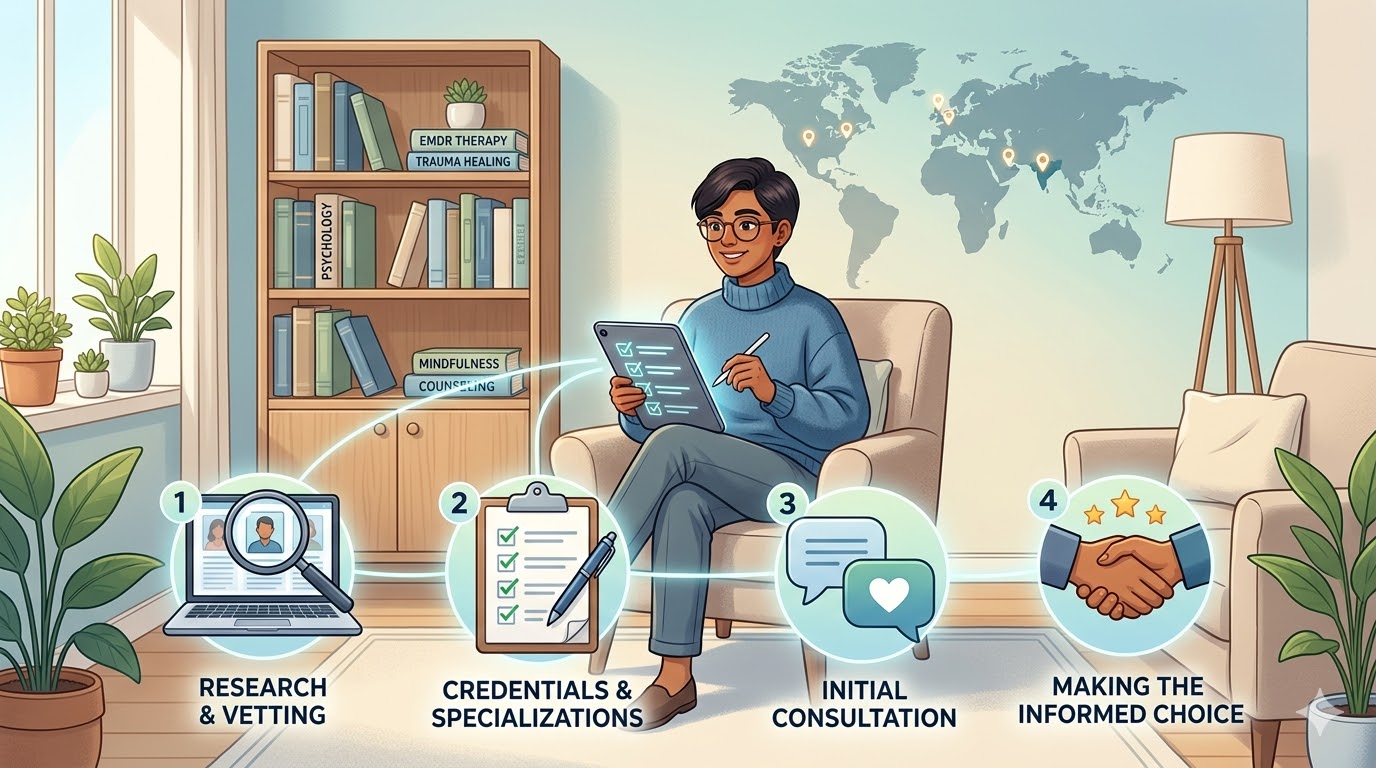
Searching for "EMDR therapist near me" is a courageous first step. You've likely heard about Eye Movement Desensitization and Reprocessing (EMDR) therapy for trauma, anxiety, or PTSD, and you're ready to find help. But with so many options, directories, and titles, how do you choose the right professional? This isn't just about proximity; it's about fit, expertise, and safety.
This guide cuts through the overwhelm. Whether you're in Mumbai, London, Dubai, or Singapore, follow these steps to make an informed, confident choice in your healing journey.
📋 Quick Navigation
Step 1: Understand What You're Actually Looking For
Before you search, know what makes EMDR unique. It's not traditional talk therapy. It's a structured, eight-phase protocol that helps your brain process distressing memories. A qualified EMDR therapist is not just a counselor who "does" EMDR; they are a guide through a specific, neurobiologically-informed process.
Key Takeaway: You need a trained practitioner, not just a well-meaning therapist. Look for those who have completed approved, specialized training in the methodology. As someone who has undergone EMDRIA-approved training, I can attest to the rigor and depth required to administer this therapy effectively and ethically. For a deeper dive, you can read my guide on what happens during and after an EMDR session.
Step 2: Know Where to Search (Beyond a Simple Google)
"Near me" in today's world often means "accessible to me." For many, especially NRIs and global citizens, the right therapist is a video call away.
- Specialist Directories: Use platforms like Psychology Today, EMDRIA's "Find a Therapist" directory (the gold standard), or TherapyRoute. These allow filtering by location, specialty, and modality.
- Focused Online Searches: Try specific phrases: "EMDR therapist for anxiety," "EMDR therapy India," "EMDR for complex trauma," "Online EMDR therapist." My article on the effectiveness of online EMDR explores this modern format.
- Professional Networks: Sometimes, a trusted mental health professional (like a psychiatrist or psychologist) can provide a referral.
Need Help Navigating Your Search?
Finding the right therapist can be overwhelming. Book a consultation to discuss what to look for and how to evaluate potential therapists for your specific needs.
Book ConsultationStep 3: The Vetting Process - Your Essential Filter
This is the most critical step. A listed therapist is not automatically the right fit.
1. Credentials are Your First Filter
Look for a licensed mental health professional (Clinical Psychologist, Counselling Psychologist, Psychiatrist, Licensed Clinical Social Worker) who also has advanced EMDR training. Completion of an EMDRIA-approved training program (like Parts 1 & 2) is a strong minimum indicator. Be wary of weekend workshops being presented as full certification. I've detailed the crucial distinctions and red flags in my guide to EMDR therapist credentials.
2. Specialization & Experience
Do they mention your specific concern (e.g., childhood trauma, phobias, ADHD, narcissistic abuse)? Experience matters. A therapist experienced with the cultural nuances affecting Indian and NRI clients can be invaluable for deeper understanding.
3. The Consultation Call is Non-Negotiable
Most therapists offer a brief introductory call. This is your interview. Prepare for it. It's not just for them to assess you, but for you to assess fit, safety, and competence.
Step 4: Your Consultation Call Checklist (What to Ask)
Come to the call empowered. Here are key questions to ask:
- "Can you tell me about your specific training in EMDR? Was it an EMDRIA-approved program?"
- "How do you integrate EMDR into your overall therapy approach?" (Do they follow the full 8-phase protocol?)
- "What is your experience working with [mention your specific issue, e.g., childhood trauma, anxiety]?"
- "For NRI/global clients, how do you handle time zones and the nuances of cross-cultural therapy?"
- "How do you prepare clients for processing and manage abreactions (strong emotional releases)?" (My guide on abreactions and the 'EMDR hangover' explains why this is important).
- "What does a typical EMDR session structure look like with you?"
Pay less attention to the "right" answers and more to the therapist's transparency, confidence, and willingness to explain. You should feel heard, not rushed. This aligns with the principles I discuss in my guide on using transparency in your therapist search.
Differentiating a Qualified Professional
| What to Look For (Green Flags) | What to Watch Out For (Red Flags) |
|---|---|
| Clear EMDRIA-approved training credentials | Vague or non-specific training background |
| Transparent about approach and session structure | Reluctance to explain their methods |
| Experience with your specific concerns | One-size-fits-all promises |
| Respects your pace and establishes safety first | Pushes to start processing immediately |
| Clear about fees, policies, and logistics | Unclear pricing or pressure to commit |
Ready to Take the Next Step?
If you're looking for an EMDR therapist with EMDRIA-approved training and experience working with a global clientele, I offer structured online EMDR therapy designed for safety and effectiveness.
Schedule a ConsultationStep 5: Making the Final Decision - Trust Your Instincts
After your research and consultations, pause and reflect:
- Did you feel safe, heard, and respected? The therapeutic relationship is the single greatest predictor of success. If you felt judged or uneasy, listen to that.
- Did they explain concepts clearly? A good therapist can demystify the process.
- Do their logistics work for you? Fees, schedule, online platform, and policy clarity matter for long-term work.
Remember, effective therapy requires a collaborative "fit." Sometimes, a highly credentialed therapist may not be the right match for your personality, and that's okay. The goal is to find the professional with whom you can build the trust necessary to do profound work. For signs that therapy is working, even when it's hard, you can read about how to know if therapy is working.
Finding the right EMDR therapist is an investment in your healing. It requires diligence, but the payoff—a guide who can expertly help you process trauma and move forward—is immeasurable. By following this structured approach, you move from an overwhelmed searcher to an empowered client.
Frequently Asked Questions
Related Reading
• EMDR Therapist Credentials: What to Look For & Red Flags
• EMDR 8 Phases Explained: What to Expect in Your Therapy
This article is for informational purposes only and does not constitute medical or therapeutic advice. Trauma therapy affects people differently. If you're experiencing significant distress, please consult with a qualified mental health professional. EMDR therapy should only be provided by appropriately trained practitioners. Dr. Antonio D'Costa is an MD Pediatrician. EMDR is an evidence-based specialized therapy for processing traumatic experiences and related emotional symptoms.