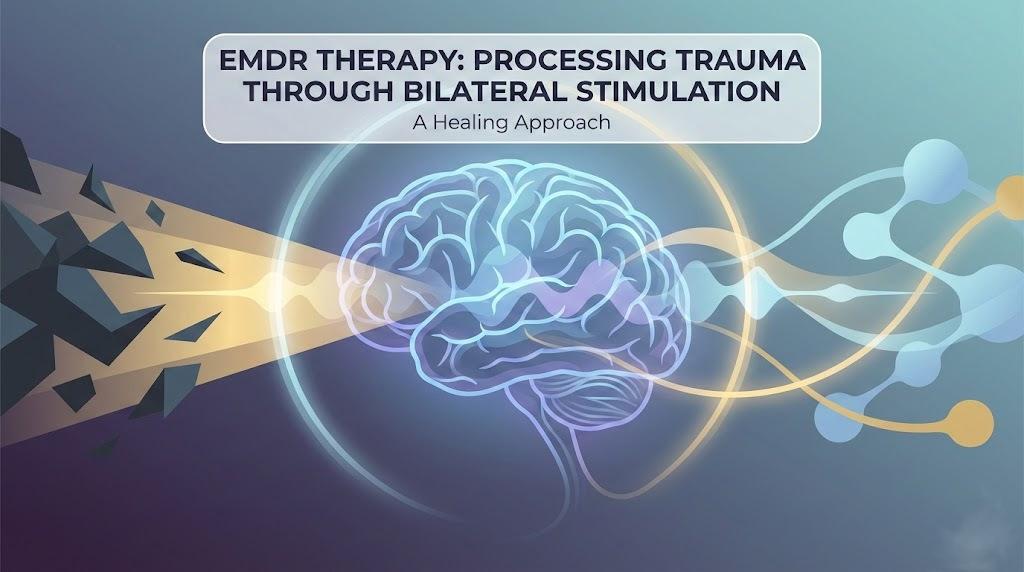
If you've searched for EMDR online, you've likely found two extremes: life-changing miracle stories and terrifying warnings of being retraumatized. This leaves you with one pressing question: What's the truth?
Is it a revolutionary, evidence-based treatment, or a risky pseudoscience that can "open Pandora's box"?
This guide exists to cut through the hype, horror stories, and confusion. We'll tackle the real doubts people voice on Reddit and forums, explain the science in plain language, and give you a clear, honest look at what to expect—so you can make an informed decision for your healing.
💡 Key Takeaways for Quick Reading
- Safety: EMDR does not "make things worse" when administered by a properly trained therapist who spends adequate time in the Preparation Phase.
- Side Effects: "Processing hangovers" (temporary fatigue, vivid dreams, emotional rawness for 24-48 hours) are normal and indicate the brain is digesting trauma.
- Mechanism: It is not pseudoscience; WHO and the APA back it. Bilateral stimulation mimics REM sleep to help the brain correctly re-file traumatic memories.
- No Memories Needed: EMDR can effectively treat trauma even if you only have vague sensory fragments, emotional states, or body sensations without a clear storyline.
📋 Quick Navigation
Part 1: The Viral Doubts—Answering the Scary Questions Head-On
1. Can EMDR Make You Worse? (The "Pandora's Box" Fear)
This is the most common and visceral fear. The short, honest answer is: It can be destabilizing if done poorly or too quickly. But with a skilled therapist, the risk is managed, and the temporary difficulty is often part of the process.
Let's break down the fear:
- The "Pandora's Box" Metaphor: People worry that starting EMDR will unleash a flood of overwhelming memories and emotions they can't control.
- The Reality: A properly trained EMDR therapist does not yank the lid off the box. Their first job is to help you build a sturdy shelf and a secure lid before you even look inside.
How a Good Therapist Prevents "Making It Worse":
- Phase 2: Preparation is Everything: Weeks may be spent not on trauma, but on building "resources." You'll learn coping skills, calming techniques (like the "Safe Place" exercise), and tools to contain distress ("Container" exercise). This is your psychological first-aid kit.
- You Are in Control: You establish a "stop signal" (e.g., raising a hand). The moment you use it, all bilateral stimulation stops. You are the driver, not the passenger.
- Pacing: You only process what you feel ready to process. A good therapist constantly checks in and will not push you beyond your window of tolerance.
Temporary Discomfort vs. Harm:
It is normal to feel more emotionally raw, tired, or have vivid dreams for 24-48 hours after a processing session. Your brain is actively digesting material. Think of it as a "processing hangover" or mental soreness after a workout—it's a sign of activity, not damage. This is often mistaken for "getting worse." Lasting regression or re-traumatization is typically a sign of insufficient preparation or poor therapeutic technique.
2. Is EMDR a Cult or Pseudoscience?
The eye movements seem weird. It's a fair question. The definitive answer: No, it is an evidence-based therapy endorsed by the world's leading health authorities.
Who Backs It Up?
- World Health Organization (WHO): Recommends EMDR for PTSD in adults and children.
- American Psychiatric Association (APA): Includes EMDR as an effective treatment for PTSD.
- U.S. Department of Veterans Affairs & Department of Defense: Strongly recommend it for combat-related PTSD.
So, Why Does It Seem "Woo"?
The mechanism—watching a finger move back and forth—can seem overly simple. The founder, Francine Shapiro's, initial discovery story ("walking in the park") gets repeated in a way that can sound unscientific.
The Science, Simplified: The leading theory (Adaptive Information Processing) suggests trauma memories get "stuck" in the brain in their raw, emotional form. The bilateral stimulation (eye movements, taps, tones) is thought to mimic the brain's natural processing during REM sleep. It's not the eye movements themselves that heal, but they appear to stimulate the brain's innate ability to metabolize and integrate these stuck memories, reducing their emotional charge. Think of it less like "magic" and more like "jump-starting a stalled biological process."
3. How Common Are "EMDR Horror Stories"?
Scrolling through forums, bad experiences can seem common. It's crucial to analyze why they happen to understand the risk.
Common Threads in Negative Experiences:
- Insufficient Preparation: The therapist rushed into reprocessing traumatic memories without building adequate coping resources first. This is the #1 cause of bad experiences.
- Poor Therapist Fit/Skill: The therapist may have been poorly trained, dismissive of the client's pace, or simply a bad personality match. EMDR is a tool; a hammer in the wrong hands can do damage.
- Misinterpreting the "Processing Effect": The normal, temporary "hangover" (emotional sensitivity, vivid dreams) was interpreted as the therapy failing or causing harm.
- Lack of Informed Consent: The client wasn't properly educated on what to expect, so normal reactions felt frightening.
The Takeaway: "Horror stories" are often a failure of process or practitioner, not an inherent flaw in the therapy itself. This is why choosing a qualified, careful therapist is non-negotiable.
Looking for a Safe, Measured Approach?
I prioritize the "Preparation Phase" to ensure you have the tools to handle EMDR safely, without feeling overwhelmed. Let's discuss how we can pace your therapy correctly.
Book a Safety-Focused Consultation4. What Are the Real Side Effects? (The "EMDR Hangover")
Let's be transparent. EMDR is active, not passive. Common short-term effects include:
- Fatigue or Mental Tiredness: Processing is cognitively and emotionally demanding.
- Heightened Emotional Sensitivity: You might feel more tearful, irritable, or anxious for a day or two.
- Vivid Dreams or Memories: Your brain may continue to process material in your sleep or downtime.
- Physical Sensations: Some report tension headaches or body awareness related to the memory being processed.
These are generally temporary (24-72 hours) and a sign your brain is actively working. A good therapist will "debrief" you at the end of a session and give you tools to manage this period.
How to Cope with the "Hangover":
- Schedule light activities after a session.
- Practice grounding techniques you learned in preparation.
- Increase self-care (rest, gentle movement, good nutrition).
- Use your "container" or journaling to set aside intrusive thoughts.
5. How Can Moving My Eyes Heal Trauma?
Let's ditch the jargon. Think of a traumatic memory not as a story you tell, but as a frozen, raw data file stored incorrectly in your brain. It contains the disturbing images, sounds, emotions, and body sensations all stuck together.
Traditional Talk Therapy tries to talk about the file from the outside.
EMDR helps your brain reprocess and re-file the memory correctly.
The bilateral stimulation (eye movements, alternating taps, or tones) is believed to:
- Engage both brain hemispheres, facilitating communication between the emotional (limbic) and rational (prefrontal cortex) parts of your brain.
- Mimic REM sleep, the state where your brain naturally processes daily experiences.
- Reduce the emotional charge by taxing your working memory. It's hard to hold onto the full vivid intensity of a memory while also tracking a moving target.
The result isn't that you forget the event. The memory becomes "digested." It moves from a present-tense, traumatic experience to a past-tense, neutral fact. You can recall it without being overwhelmed by the old emotions.
Still Have Questions About EMDR?
Book a consultation to get your specific concerns addressed directly with an EMDR-trained practitioner.
Book ConsultationPart 2: The Practical Guide—What Actually Happens
6. What Really Happens in an EMDR Session? (Step-by-Step)
EMDR follows an 8-phase protocol. You won't do all phases in one session. The early phases are foundational.
Phase 1: History-Taking
Your therapist learns about you, your trauma history, and identifies specific "target" memories to work on.
Phase 2: Preparation (The MOST Important Safety Phase)
This is where coping skills and safety tools are built. You'll learn grounding techniques, create a "Safe Place" in your mind, and practice the "Container" exercise to put disturbing material away between sessions.
Phase 3: Assessment
For a specific target memory, you identify:
- Image: The worst part of the memory.
- Negative Belief: "I am powerless" or "I am to blame."
- Positive Belief: What you'd rather believe ("I am safe now").
- Emotions & Body Sensations: Where you feel it in your body.
Phases 4-6: Desensitization, Installation, Body Scan
This is the "processing" core. You hold the memory in mind while simultaneously engaging in bilateral stimulation (e.g., following the therapist's fingers with your eyes). Sets of eye movements last 20-60 seconds. After each set, you report what comes up—it could be a new thought, image, memory, or sensation. The process continues until the memory loses its distress. The positive belief is then strengthened, and you scan your body for any residual tension.
Phases 7-8: Closure & Reevaluation
Each session ends with a deliberate "closure" to ensure you feel stable before leaving. Future sessions check on progress and address new targets.
7. EMDR vs. CBT vs. Talk Therapy: What's the Difference?
| Therapy Type | Primary Focus | How It Works |
|---|---|---|
| Traditional Talk Therapy | Understanding the why | Explores childhood patterns, therapeutic relationship, and gains intellectual insight over long periods |
| Cognitive Behavioral Therapy (CBT) | The here and now | Identifies and changes negative thought patterns and behaviors through structured sessions and homework |
| EMDR Therapy | Processing the memory itself | Changes how traumatic memories are stored in the brain, which then automatically changes thoughts, feelings, and behaviors |
Think of it like treating a poisoned wound:
- Talk Therapy analyzes how the poison got there.
- CBT gives you tools to manage the pain and bandage the wound.
- EMDR seeks to gently extract the poison so the wound can heal from the inside out.
8. How Long Does EMDR Take to Work?
There is no one answer, but it's often shorter-term than traditional therapies for single-incident trauma.
- Single, Recent Trauma (e.g., a car accident): May see significant relief in 6-12 sessions.
- Complex or Childhood Trauma (C-PTSD): Requires longer preparation and may involve many memories. Treatment could last 6 months to a year or more.
- The First Sign of Change: People often notice a shift after the first few processing sessions—the memory may feel more distant or less emotionally charged.
The preparation phase is critical and cannot be rushed. The actual processing can be surprisingly rapid.
9. How Do I Find a Qualified EMDR Therapist? (Red Flags vs. Green Flags)
This is the single most important factor for safety and success.
Ask These Questions:
- "Are you EMDRIA-certified or have you completed an EMDRIA-approved basic training?" (EMDR International Association is the gold standard).
- "What is your experience using EMDR with my specific issue?"
- "How do you handle client safety and pacing? What does your preparation phase look like?"
| Green Flags ✅ | Red Flags 🚩 |
|---|---|
| Emphasizes preparation, safety, and your control | Wants to jump into processing traumatic memories in the first session |
| Has a clear explanation of the process and phases | Cannot clearly explain the protocol or the importance of preparation |
| Welcomes your questions and doubts | Dismisses your concerns about safety or side effects |
| Is licensed in their core profession | Claims 100% success rates or immediate cures |
Part 3: Is EMDR Right for You?
What Issues Can EMDR Treat? (Beyond PTSD)
While renowned for PTSD, research and clinical practice show it's effective for any issue rooted in distressing life experiences:
- Anxiety & Panic Attacks
- Phobias
- Grief and Loss
- Childhood Neglect or Abuse
- Performance Anxiety (public speaking, sports, arts)
- Chronic Pain (when linked to emotional distress)
- Low Self-Esteem & Negative Self-Beliefs ("I am not good enough")
If your current problem feels connected to a past memory that still holds an emotional charge, EMDR may be a viable option.
Can EMDR Work If You Have No Clear Memories?
This is one of the most common and valid concerns, especially for people who:
- Have vague feelings but no specific "movie-like" memories
- Experienced early childhood trauma before explicit memory formed
- Have dissociated from or blocked out traumatic events (dissociative amnesia)
- Only remember through "body memories" or emotions
The short answer: Yes, EMDR can still be effective.
How EMDR Works Without Clear Narrative Memories
EMDR doesn't require you to recount a detailed, coherent story. It works with whatever material your brain presents—which might include:
- Sensory Fragments: A smell, sound, physical sensation, or vague image
- Emotional States: A specific feeling (terror, shame, numbness) without knowing why
- Body Sensations: Tightness in chest, nausea, numbness in limbs
- Negative Beliefs: "I'm not safe" or "I'm broken" without knowing where it came from
- Triggers: Current situations that provoke disproportionate reactions
The EMDR Therapist's Approach When Memories Are Fuzzy
A skilled EMDR therapist will:
- Start with the Present: Begin with current symptoms, triggers, or problems—even if you don't know their origin. ("What happens now that bothers you?")
- Use the "Floatback" Technique: Identify a current disturbing feeling or reaction, then let your mind float back to the earliest time you felt something similar—even if it's just a vague sense or fragment.
- Work with "Earliest" or "Worst": If you have no specific memory, we might target:
- The earliest time you remember feeling this way
- The most recent time you felt overwhelmed by it
- A representative image that captures the feeling
- Focus on the Physical: Your body often remembers what your conscious mind doesn't. We might start with where you feel the disturbance in your body right now.
- Use "Resource Development" First: Strengthen your internal resources and coping skills extensively before any processing, which is especially important when memories are unclear.
What You Might Experience
- Memories May or May Not Emerge: Some people recover clearer memories during processing; others process the disturbance without ever getting narrative clarity.
- The Feeling Changes First: Often, the emotional charge decreases first, and clarity about the memory may (or may not) come later.
- It Still Works: Research and clinical experience show that EMDR can reduce symptoms even when explicit memories never fully form.
Important Considerations
Safety First: Processing without clear memories requires particularly careful preparation and pacing with a therapist experienced in this area.
Dissociation Awareness: Lack of memory can sometimes indicate dissociation. A trained EMDR therapist will screen for this and adjust the approach accordingly.
Lowered Expectations: You might not end up with a "complete story," but you can still achieve relief from symptoms like anxiety, flashbacks, or negative self-beliefs.
Conclusion & Your Next Step
EMDR is not a magic bullet, nor is it a dangerous pseudoscience. It is a powerful, evidence-based tool that works by harnessing your brain's natural healing processes. Its effectiveness and safety depend almost entirely on two factors:
- The skill and care of the therapist.
- The adequacy of the preparation before processing.
The doubts you read online are valid, but they often point to failures in these two areas, not in the therapy itself.
If you are considering EMDR, your next step is not to try it—it's to vet a potential therapist. Have a consultation. Ask the hard questions from this guide. Pay attention to how they answer. Do they prioritize your safety and control? Do they explain the process clearly?
A qualified EMDR therapist will welcome this conversation and help you determine, without pressure, if it's the right path forward for you.
Ready to Address Your EMDR Concerns?
Schedule a 15-minute consultation to discuss your specific situation and get honest answers about whether EMDR might be right for you.
Book ConsultationFrequently Asked Questions
Related Reading
• EMDR Therapy: What If You Don't Have Clear Memories?
• The 8 Phases of EMDR Therapy Explained
• What Really Happens During & After EMDR: Abreactions & Hangovers
This article is for informational purposes only and does not constitute medical or therapeutic advice. Trauma therapy affects people differently. If you're experiencing significant distress, please consult with a qualified mental health professional. EMDR therapy should only be provided by appropriately trained practitioners. Dr. Antonio D'Costa is an MD Pediatrician. EMDR is an evidence-based specialized therapy for processing traumatic experiences and related emotional symptoms.