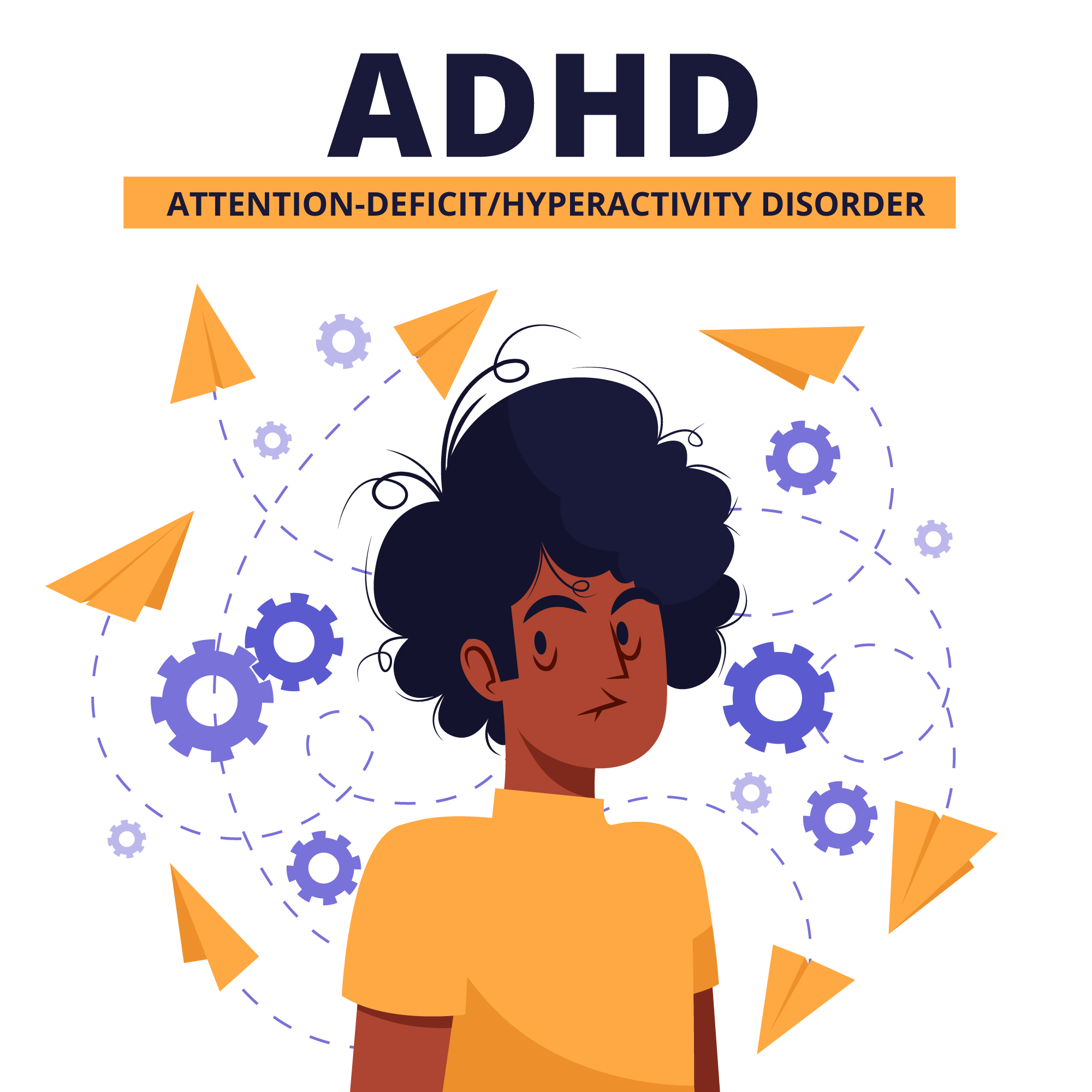
You've been called "lazy" your whole life.
But you're not lazy. You work harder than anyone you know. You just can't seem to make your brain cooperate when you need it to.
The essay that should take two hours? You start it at 2 AM the night before—racing against panic because that's the only time your brain works. The conversation with your partner about planning a vacation? You zone out halfway through, even though you want to listen. The important email you need to send? It's been sitting in your drafts for three weeks because somehow clicking "send" feels impossible.
And the worst part? Everyone thinks you're not trying.
You've heard it all: "Just focus." "Set a reminder." "Use a planner." "Try harder."
You want to scream: I AM trying. My brain just won't let me.
If you've been struggling with ADHD that feels heavier than just "can't focus"—this article is for you.
📋 Quick Navigation
- Why Talk Therapy Fails ADHD Brains
- The ADHD-Trauma Connection Nobody Talks About
- Why You Can Only Get Things Done at the Last Minute
- What Happens When People Force You (And You Just Can't)
- Why Medication Alone Isn't Enough
- Comparing Approaches: What Actually Works for ADHD
- How EMDR Therapy Works for ADHD Brains
- What Makes EMDR Different for Neurodivergent Clients
- My Background: MD Pediatrician + EMDR Specialist
- What to Expect in EMDR Sessions
- Who EMDR Helps Most
- Frequently Asked Questions
Why Talk Therapy Fails ADHD Brains
Here's what nobody tells you about traditional therapy for ADHD:
It requires the exact skills ADHD makes difficult.
Think about it. Talk therapy asks you to:
- Sit still for 50 minutes
- Maintain focus on one topic
- Recall details from your week
- Process complex emotional patterns through conversation
- Remember insights between sessions
If you have ADHD, that's like asking someone with a broken leg to run a marathon.
Your therapist is probably kind. Competent. Well-meaning. But if they're only using talk therapy, they're asking your ADHD brain to do something it fundamentally struggles with—and then wondering why you're not "getting better."
The CBT Trap
Cognitive Behavioral Therapy (CBT) is the gold standard for ADHD, right?
Except CBT is built on changing thought patterns. It assumes that if you change how you think, you'll change how you feel and behave.
But here's the problem: ADHD isn't a thinking problem. It's a nervous system regulation problem.
Your brain knows the report is important. Your brain knows you should reply to that text. Your brain understands the logic.
Your nervous system just won't cooperate.
And if you have trauma layered on top of your ADHD—which most people do—talk therapy becomes even less effective.
Wondering If This Is You?
A brief consultation can help clarify whether trauma-informed EMDR therapy is right for your ADHD experience. Available via teletherapy across India.
Schedule ConsultationThe ADHD-Trauma Connection Nobody Talks About
As a pediatrician, I've seen this pattern hundreds of times.
A child has ADHD. They struggle in school. They're called "disruptive," "careless," "not trying hard enough."
Their parents get frustrated. Teachers lose patience. Other kids laugh when they blurt out the wrong answer.
By the time they're adults, they don't just have ADHD symptoms. They have:
- Deep shame about being "broken"
- Anxiety triggered by deadlines or authority figures
- Rejection sensitivity so intense it's paralyzing
- Perfectionism that makes starting anything terrifying
- Constant hypervigilance, waiting for the next criticism
That's not just ADHD. That's ADHD plus trauma.
Research shows 30-40% of ADHD symptoms in adults are actually trauma responses—adverse childhood experiences (ACEs) that got misattributed to "just ADHD."
And here's what makes it worse: ADHD itself makes you more vulnerable to trauma.
You're more likely to experience:
- Childhood bullying (because you were "weird" or "too much")
- Academic failure despite working harder than your peers
- Parental disappointment and criticism
- Social rejection and isolation
- Workplace difficulties and job loss
Each of these experiences leaves an imprint on your nervous system. And talk therapy alone can't touch it.
Why You Can Only Get Things Done at the Last Minute
Let me paint a picture you'll recognize:
The deadline is Friday. It's Monday. You tell yourself: "I'll start today. I have plenty of time."
Monday passes. Tuesday passes. Wednesday you panic a little—but still, nothing.
Thursday night, 11 PM, the panic hits. Suddenly your brain works. You hyperfocus for six hours straight and finish the project.
Everyone thinks you're a procrastinator. But you're not.
You're not avoiding the work. You need the adrenaline to access your executive function.
Here's what's happening: ADHD brains struggle with dopamine regulation. Dopamine is what helps you initiate tasks, sustain attention, and feel motivated.
When there's no deadline, there's no dopamine hit. Your brain literally can't engage.
But when the deadline is imminent? Your nervous system floods with adrenaline and cortisol (stress hormones). That chemical surge temporarily compensates for the dopamine deficit. Suddenly you can focus.
You've learned to rely on panic to function.
And if you have trauma? That pattern gets even more entrenched. Your nervous system learned early on that the only way to get things done is under pressure—because that's when people finally stopped criticizing you and started seeing results.
This isn't a character flaw. It's a survival mechanism your brain developed to cope with neurodivergence in a neurotypical world.
What Happens When People Force You (And You Just Can't)
Remember the times when:
- Your parents yelled at you to clean your room, and you sat there frozen, unable to move
- Your boss threatened consequences if you didn't finish the report, and your brain just... shut down
- Your partner begged you to "just do this one thing," and you couldn't—even though you desperately wanted to
People think you're defiant. Stubborn. Choosing not to comply.
But it's not a choice. It's a nervous system freeze response.
When someone pressures you to do something your ADHD brain can't organize or initiate, your nervous system perceives it as a threat. And when your nervous system feels threatened, it has three options:
- Fight (argue, get defensive, lash out)
- Flight (avoid, escape, distract yourself)
- Freeze (shut down, dissociate, go blank)
You're not trying to be difficult. Your brain is trying to protect you from a situation it can't handle.
And every time this happens—every time someone forces you and you fail, or yells at you for "not trying"—it adds another layer of trauma.
Another belief that you're broken. Another memory of humiliation. Another wound your nervous system carries.
These aren't "just ADHD moments." These are traumatic events that shape how you see yourself and how your nervous system responds to stress.
And they don't heal through understanding. They heal through reprocessing.
Why Medication Alone Isn't Enough
Let me be clear: ADHD medication can be life-changing. Stimulants and non-stimulants help with focus, attention, and impulse control.
But medication doesn't touch:
- The shame you carry from years of being called "lazy"
- The rejection sensitivity that makes feedback feel like an attack
- The perfectionism that keeps you from starting anything
- The freeze response when you're under pressure
- The anxiety that comes from decades of feeling "not good enough"
Medication manages symptoms. It doesn't heal the trauma underneath.
And for many people with ADHD, the emotional dysregulation—the sudden outbursts, the crying over small things, the inability to handle frustration—that's not a dopamine problem. That's a nervous system problem rooted in years of accumulated stress and trauma.
That's where EMDR comes in.
Comparing Approaches: What Actually Works for ADHD
| Approach | What It Addresses | What It Misses | Best Used For |
|---|---|---|---|
| Medication (Stimulants/Non-stimulants) | Focus, attention, impulse control, dopamine regulation | Emotional dysregulation, rejection sensitivity, shame, trauma responses | Managing core ADHD symptoms; works best with therapy |
| CBT (Talk Therapy) | Thought patterns, cognitive reframing, behavior modification | Nervous system activation; requires sustained focus ADHD brains lack | Anxiety with clear triggers; not ideal for ADHD-related trauma |
| ADHD Coaching | Time management, productivity systems, accountability structures | Emotional wounds, trauma, nervous system dysregulation | Building practical skills after trauma is addressed |
| EMDR Therapy | Trauma reprocessing, nervous system regulation, shame/rejection sensitivity, freeze responses | Doesn't cure ADHD; not a replacement for medication or psychiatric care | ADHD + trauma, emotional dysregulation, perfectionism, childhood wounds |
The Ideal Combination: Medication for symptom management + EMDR for trauma healing + Psychiatrist for comprehensive care. This addresses both the neurological and emotional layers of ADHD.
How EMDR Therapy Works for ADHD Brains
EMDR stands for Eye Movement Desensitization and Reprocessing.
It's not talk therapy. You don't need to sit still for an hour and articulate complex emotions. You don't need perfect recall or sustained attention.
EMDR works directly with your nervous system to reprocess stuck trauma.
Here's the simplified version:
When something traumatic happens—whether it's a single big event or repeated small wounds—your brain can't process it properly. The memory gets stored with all the emotions, body sensations, and beliefs from that moment.
So 20 years later, when your boss gives you feedback, your nervous system reacts like you're back in third grade getting yelled at by your teacher. The past and present blur together.
EMDR uses bilateral stimulation (usually guided eye movements) to help your brain reprocess these stuck memories. It activates both hemispheres of your brain simultaneously—similar to what happens during REM sleep when your brain naturally processes memories.
With both sides of your brain engaged, the memory gets "unstuck." Your brain can finally integrate it. File it away as "something that happened" instead of "something that's happening right now."
What EMDR Can Address for ADHD
Through EMDR, we can target:
- Childhood shame and criticism ("You're so lazy," "Why can't you just focus?")
- Academic trauma (failing despite trying harder than everyone else)
- Social rejection (being bullied, excluded, or misunderstood)
- Workplace difficulties (getting fired, negative performance reviews, imposter syndrome)
- Relationship patterns (rejection sensitivity, emotional outbursts, fear of abandonment)
- Perfectionism and freeze (the inability to start because you're terrified of failing)
Research-Backed Benefits
Studies show EMDR for ADHD clients leads to:
- Improved executive functioning (working memory, cognitive flexibility, planning)
- Enhanced selective attention and creativity
- Reduced emotional dysregulation
- Better interpersonal relationships and communication
- Decreased anxiety, shame, and negative self-beliefs
- Lower hyperactivity and impulsivity in some cases
One study found that after EMDR, ADHD clients showed significant improvements in working memory and selective attention—skills that are core deficits in ADHD.
Another found that children with ADHD who received EMDR had better cognitive flexibility and creativity compared to those who didn't.
EMDR doesn't "cure" ADHD. But it removes the trauma that makes ADHD symptoms heavier and harder to manage.
Ready to Stop Carrying the Weight?
EMDR therapy helps your nervous system release years of ADHD-related trauma—shame, rejection sensitivity, perfectionism, freeze responses. Available via secure teletherapy across India.
Start EMDR TherapyWhat Makes EMDR Different for Neurodivergent Clients
I adapt EMDR specifically for ADHD brains.
That means:
- Shorter, focused sessions when needed (we can break processing into smaller chunks)
- No pressure to maintain prolonged focus (if you need to move, fidget, or take breaks, that's fine)
- External engagement techniques (bilateral stimulation can be adapted—tapping, audio tones, tactile buzzers)
- Working at your pace (if your brain needs to wander, we work with that, not against it)
- Psychoeducation that makes sense (I explain what's happening in your nervous system in concrete terms)
This is neurodiversity-affirming therapy. I'm not trying to make you "normal." I'm helping your nervous system feel safe so your ADHD brain can function without the added weight of trauma.
My Background: MD Pediatrician + EMDR Specialist
I come to this work with a unique lens.
As a pediatrician, I've spent years understanding child development, nervous system regulation, and how early experiences shape the brain. I've worked with hundreds of children who were misunderstood, mislabeled, or shamed for being neurodivergent.
Most of my trauma clients carry wounds from childhood. I understand how those early experiences—being called lazy, getting in trouble for things you couldn't control, feeling like you were too much or not enough—shaped your nervous system development.
And I understand your nervous system at a physiological level. When you describe racing thoughts, emotional outbursts, freeze responses, or hypervigilance, I'm not just hearing your story. I'm understanding exactly which part of your nervous system is activated—and how to help it recalibrate.
What to Expect in EMDR Sessions
Initial Consultation (15 minutes)
This is a screening call. No pressure, no commitment. We talk about:
- What you're struggling with
- Whether EMDR makes sense for your situation
- What to expect from the process
- Whether we're a good fit
Session 1: History and Preparation (60 minutes)
We build the foundation. I ask about:
- What brought you to therapy
- Your history (overview, not every detail)
- Current symptoms and how they affect your daily life
- Past therapy or medication experiences
- Your goals for EMDR
We also talk about how your ADHD shows up—not just "can't focus," but the emotional patterns, the shame, the ways you've learned to cope.
Sessions 2+: EMDR Processing (60-90 minutes)
We identify a specific memory or belief to work with. Usually we start with something moderate—not the worst trauma, but something that's affecting you now.
You identify:
- The key image or moment
- What negative belief comes up ("I'm a failure," "I'm lazy," "Something is wrong with me")
- Where you feel it in your body
- How distressing it feels (0-10 scale)
Then we begin bilateral stimulation. You briefly hold the memory in mind while following guided eye movements (or using tapping/audio tones).
Your brain does the rest. Memories, emotions, body sensations, and insights emerge naturally. My job is to guide the process and keep you grounded.
How Long Does It Take?
Most people notice shifts within the first few processing sessions. Real change—where your nervous system genuinely responds differently—typically takes 6-12 sessions.
Some people need more, some need less. It depends on how much trauma is layered on top of your ADHD.
Who EMDR Helps Most
EMDR is especially effective if you:
- Have ADHD with a history of childhood shame, criticism, or bullying
- Experience emotional dysregulation (sudden crying, outbursts, intense reactions)
- Struggle with rejection sensitivity or fear of failure
- Have tried medication but still feel emotionally stuck
- Were diagnosed late in life and carry years of internalized shame
- Rely on last-minute panic to get things done
- Freeze when people pressure you, even when you desperately want to comply
- Feel like you're "broken" or fundamentally different from everyone else
Frequently Asked Questions
Related Reading
• Why Trauma Could Be Behind Your Anxiety, Depression, and ADHD
• Why Your Therapist Isn't Helping (And What Actually Works for Anxiety)
• Why You're So Perfectionistic (Hint: It's Your Childhood Trauma)
• EMDR vs. Talk Therapy: Research Shows What Actually Changes Your Brain
This article is for informational purposes only and does not constitute medical or therapeutic advice. Trauma affects people differently. If you're experiencing trauma symptoms, please consult with a qualified mental health professional. EMDR therapy should only be provided by appropriately trained practitioners. Dr. Antonio D'Costa is an MD Pediatrician. EMDR is an evidence-based specialized therapy for processing traumatic experiences and related emotional symptoms.