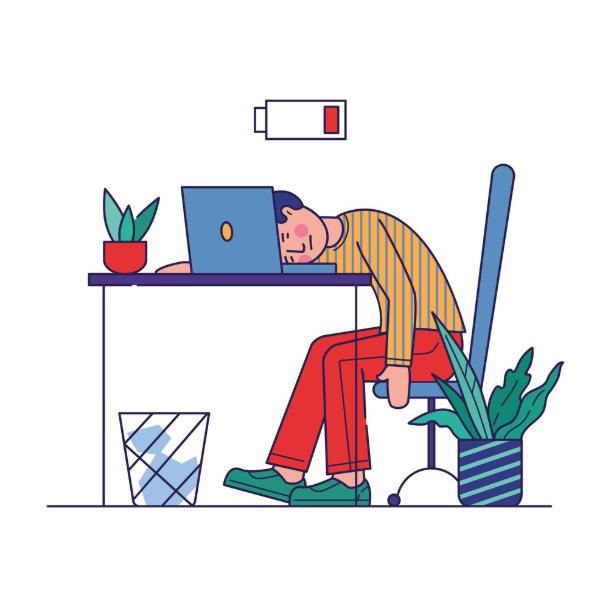
You're not lazy.
You're not weak.
You were in a genuinely unsafe environment for 12+ hours a day. For months. Or years.
Maybe it was a boss who humiliated you publicly. Maybe it was impossible deadlines and constant criticism. Maybe it was the culture that said overwork was a badge of honor—that "work is worship." Maybe you were constantly told you weren't doing enough, weren't good enough, weren't enough.
Your nervous system was under chronic threat.
Now, even though you've left that job, you're exhausted. You can't sleep properly. You don't want to work—at anything. The thought of another job, even a good one, makes you panic. You feel numb. Empty. Like the engine that was always running has finally shut down.
And you're blaming yourself for being burned out.
Here's the truth: Your burnout isn't a character flaw. It's your nervous system protecting you.
And it can heal.
📋 Quick Navigation
- The Burnout Myth: It's Not About Time Off
- How Workplace Trauma Gets Stored in Your Body
- India's Specific Burnout Problem: Hustle Culture as Trauma
- The Physical Cost: What Burnout Actually Does to Your Body
- What Recovery Actually Looks Like
- Why Vacation Doesn't Fix Burnout (But Reprocessing Does)
- Recovery Is Possible—Even in India
- The Recovery Path
- Frequently Asked Questions
The Burnout Myth: It's Not About Time Off
People think burnout is solved with vacation.
"Just take a week off. You'll feel better."
"You need a break."
"Try meditation and self-care."
And maybe for a moment—that first day of vacation—you feel a tiny bit better. Your nervous system relaxes slightly.
But then you come back. And you're still exhausted.
Because burnout isn't about needing time off.
Burnout is unprocessed workplace trauma.
It's what happens when your nervous system has been in threat mode for so long that it stays activated even when the threat is gone. Your body learned: "This environment is dangerous. Stay alert. Stay tired. Shut down non-essential functions."
Vacation doesn't reprogram that.
Meditation doesn't reprogram that.
Time and willpower don't reprogram that.
Your nervous system needs something else: It needs to process the trauma. It needs to learn that the threat has passed.
How Workplace Trauma Gets Stored in Your Body
Chronic workplace stress isn't the same as regular stress.
Regular stress: Something happens, you handle it, your body calms down.
Chronic workplace stress: Something threatens you, your nervous system activates, but the threat never goes away. So your nervous system stays activated. For months. Years. Constantly vigilant. Always scanning for the next criticism, the next deadline, the next failure.
Your body keeps running on cortisol and adrenaline.
Your sleep suffers. Your digestion suffers. Your immune system suffers. Inflammation builds in your body. You get sick more. You feel tired all the time—the kind of tired that sleep doesn't fix.
This is your nervous system saying: "I'm not safe. I'm not resting. I'm protecting you."
And it's brilliant, actually. Your body is literally trying to protect you from an environment that was harming you.
But now you're out of that environment. And your body is still running the protection program.
Why You Can't "Just Push Through"
Burnout isn't laziness or weakness. It's your nervous system in a protective shutdown mode. You can't think your way out of it. Your body needs to reprocess the trauma.
India's Specific Burnout Problem: Hustle Culture as Trauma
In India, we have a specific problem.
We've been taught that work is worship. That your value comes from your output. That overwork is a flex, not a red flag.
"Work hard. Sacrifice. Grind."
"Your family depends on you."
"You're lucky to have a job."
So when your boss demands 14-hour days. When your company culture glorifies exhaustion. When taking a day off feels like a betrayal—you don't question it.
You internalize it.
You tell yourself you're just not working hard enough. You blame yourself for being tired. You double down and push harder.
Until you crash.
And now you're burned out, and you're ashamed about being burned out, because you were taught that burnout is for weak people. For people who don't work hard enough.
This is trauma. Cultural trauma meets workplace trauma meets individual nervous system dysregulation.
It needs to be treated as such.
The Physical Cost: What Burnout Actually Does to Your Body
This isn't just mental exhaustion. Burnout physically changes your body.
HPA Axis Dysregulation: Your stress response system (the hypothalamic-pituitary-adrenal axis) becomes chronically overstimulated. It stops responding normally to stress signals. So you end up either exhausted all the time OR wired and unable to sleep.
Immune System Suppression: Chronic stress shuts down your immune system. You get sick constantly. Colds last longer. You're vulnerable to infection.
Chronic Inflammation: Your body is in a constant state of low-level inflammation, linked to everything—heart disease, autoimmune disorders, depression, cognitive decline.
Neuroplastic Changes: Your brain actually changes structure under chronic stress. The prefrontal cortex (thinking brain) shrinks. The amygdala (fear center) grows. Your brain is literally rewired for threat.
But here's the good news: Neuroplasticity works both ways.
Your brain can rewire itself back. Your nervous system can relearn that you're safe.
What Recovery Actually Looks Like
You won't become a different person.
You don't lose your work drive or your ambition.
What happens is: You become yourself again.
You become someone who can work hard without your nervous system freaking out. Who can handle deadlines without panic. Who can rest without guilt. Who can take a day off and actually feel recovered.
I had a client—let's call her Priya—who came to me completely burned out from a 7-year corporate job. She was a project manager. Brilliant. High-performer. But her company culture was toxic: constant pressure, unrealistic deadlines, a boss who managed through fear.
She quit, but the burnout followed her. She couldn't sleep. She didn't want to work. She felt numb. She thought something was permanently broken in her.
After 6 sessions of EMDR therapy targeting the workplace trauma, something shifted.
She got another job. A similar role, actually. But this time? She could do it without her nervous system going into meltdown. She could handle pressure without it feeling like a threat to her survival.
She could work hard and actually enjoy it.
That's recovery.
Why Vacation Doesn't Fix Burnout (But Reprocessing Does)
Vacation is like putting a bandage on a deep cut.
It helps temporarily. But if you don't treat the underlying wound, it gets infected.
Your nervous system learned that workplaces are dangerous. Time off doesn't teach your nervous system otherwise.
What teaches your nervous system that you're safe again? Reprocessing the trauma.
When you're in EMDR or somatic therapy targeting workplace trauma, your nervous system actively updates its threat assessment. It processes the stuck memory. It learns: "That was survival mode. But you survived. You're out now. You're safe."
The exhaustion lifts. The sleep improves. The motivation returns.
Not because you think differently about your job. But because your nervous system has reprocessed what happened and integrated the experience.
It's not about willpower or positivity or meditation.
It's about nervous system healing.
Recovery Is Possible—Even in India
If you're burned out in India, you're facing an extra layer: cultural shame.
There's judgment. "Why can't you handle what everyone else is handling?" "People work this hard everywhere." "You're lucky to have a job."
But burnout is real. And it's treatable.
The fact that overwork is valorized in your culture doesn't mean you're weak for burning out. It means the culture is damaging.
And your nervous system is doing exactly what it's supposed to do: protecting you by shutting down.
The good news: You can recover without leaving India. You can work with an MD-trained trauma therapist via online sessions. You don't need to take time off work to heal. You can process the trauma in sessions and slowly rebuild your capacity.
And the cost is accessible: ₹400 screening call, ₹2,500-3,500 per session, typically 6-10 sessions for significant burnout recovery.
Most people see shifts within 2-3 weeks. Significant recovery within 8-12 weeks.
Your Exhaustion Isn't Weakness
It's your nervous system asking for help. Book an assessment to see if trauma reprocessing can help you recover from burnout.
Book Your AssessmentThe Recovery Path
Burnout recovery looks like this:
Phase 1 (Sessions 1-3): Screening, building safety, understanding the trauma. Your therapist will ask about your work history, the specific traumas, your support system, your current state.
Phase 2 (Sessions 4-8): Processing the workplace trauma. You briefly focus on the difficult memories while bilateral stimulation helps your brain reprocess them.
Phase 3 (Sessions 9-12): Integration and resilience. Your nervous system has reprocessed the trauma. Now we work on rebuilding your capacity and setting healthy boundaries for future work.
By the end, you're not the same person who was burned out. You're the person you were before the burnout, but stronger. With boundaries. With nervous system capacity.
Burnout Can Be Reversed
Most clients return to work energized—not burned out—in 10-12 sessions. Your exhaustion is treatable. Let's get you recovered.
Start Your RecoveryFrequently Asked Questions
Related Reading
• Why You're So Perfectionistic (Hint: It's Your Childhood Trauma)
• Why Your Therapist Isn't Helping (And What Actually Works for Anxiety)
• EMDR vs. Talk Therapy—Research Shows What Actually Changes Your Brain
• RED FLAGS & GREEN FLAGS—How to Know Your EMDR Therapist Knows What They're Doing
This article is for informational purposes only and does not constitute medical or therapeutic advice. Trauma affects people differently. If you're experiencing trauma symptoms, please consult with a qualified mental health professional. EMDR therapy should only be provided by appropriately trained practitioners. Dr. Antonio D'Costa is an MD Pediatrician. EMDR is an evidence-based specialized therapy for processing traumatic experiences and related emotional symptoms.