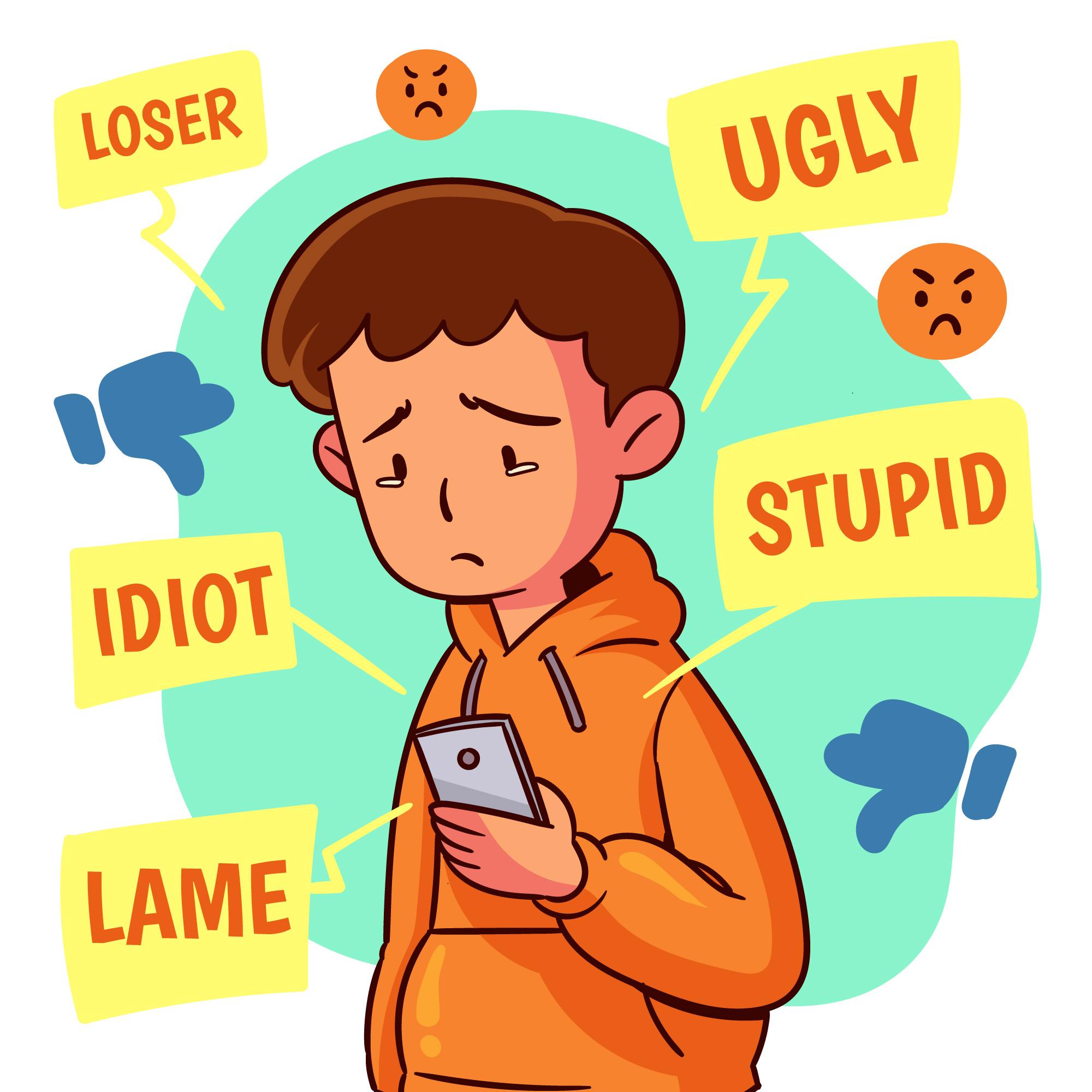
You were nine years old when someone made you feel small.
Maybe it was in front of the whole class. Maybe it was whispered in the corridor. Maybe it's a memory so old you can't quite see the faces anymore—but you remember the feeling.
The hot shame. The wish to disappear.
That feeling didn't disappear with you.
I see this in therapy sessions repeatedly. Adults come in saying they have generalized anxiety or social anxiety or panic attacks, and when we trace it back—really trace it—we often find a child. A child who learned early that the world wasn't entirely safe. That people could hurt you with words. That being noticed sometimes meant being targeted.
And here's the thing: your nervous system never forgot.
That's not weakness. That's biology. That's a protective system that did exactly what it was designed to do—it learned danger and stored it. And now, decades later, you're still protecting yourself from that nine-year-old's experience.
📋 Quick Navigation
What Bullying Does to a Child's Nervous System
When you're bullied, your body doesn't distinguish between a physical threat and a social one. To your nervous system, being publicly humiliated is a survival threat.
Here's what happens:
- Your amygdala—the brain's alarm system—detects danger: "You're not safe here."
- Your body floods with stress hormones: adrenaline, cortisol, noradrenaline.
- Your prefrontal cortex (thinking brain) goes offline.
- You go into survival mode: fight, flight, freeze, or fawn.
If you froze—if you went silent and small—your nervous system learned: "When threatened, disappear."
If you fawned—if you tried to please the bully—your nervous system learned: "My safety depends on reading others and managing their emotions."
If you fought back—if you got angry—your nervous system learned: "The world is hostile and I need to be ready to defend."
Any of these, repeated over weeks or months or years, gets encoded. It becomes the baseline setting for your nervous system.
And then you grow up. You leave school. Nobody's bullying you anymore.
But your nervous system doesn't know that. It still thinks you're nine years old in that classroom.
Wondering If This Is You?
A brief consultation (available via teletherapy across India and internationally) can help clarify whether trauma-informed therapy like EMDR is right for your experience.
Schedule ConsultationAdult Anxiety Patterns That Trace Back to School
So what does school bullying trauma look like in an adult?
Social Anxiety
You walk into a meeting and feel that same old dread. Everyone's eyes on you, and suddenly you're nine again—certain they're judging you, about to humiliate you. Your hands shake. Your mind goes blank. You want to escape.
People-Pleasing
You say yes to everything because saying no feels dangerous. You monitor others' moods constantly, adjusting yourself to keep them happy. You can't relax around people because you're always scanning for signs of rejection.
Perfectionism
You believe that if your work is perfect enough, you won't be attacked. You stay late. You obsess over details. You can't take criticism without shame flooding your entire body.
Workplace Triggers
Public speaking makes your heart race. Being corrected feels like humiliation. You avoid attention because attention means potential attack. Meanwhile, your quietness gets interpreted as disinterest, and you lose opportunities.
Hypervigilance
You're always watching. Noticing who's talking about you. Interpreting neutral comments as criticism. Reading the room obsessively. By the end of the day, you're exhausted.
Avoidance
You skip social events. You don't raise your hand in meetings. You turn down promotions that require visibility. You tell yourself you're just introverted, but really, you're protecting yourself the only way you know how.
All of this makes sense if you learned early that being seen means being hurt.
Why Understanding This Isn't Enough
Here's where most people get stuck: they go to therapy, they talk about the bullying, they understand why they are the way they are. They gain insight.
"Oh, I see it now. That teacher humiliated me in front of the class, and now I'm afraid of public speaking. That makes sense."
And it does make sense. Intellectually, they get it. They can explain their anxiety perfectly.
But they still can't give a presentation without their hands shaking. They still can't go to a party without scanning for exits. They still can't relax.
This is called insight without integration.
Your thinking brain understands. Your nervous system hasn't gotten the memo.
Because trauma isn't stored as a story you can think your way out of. Trauma is stored in the body. It's encoded in the nervous system as a protective pattern: "Danger here. Stay alert. Don't be seen."
You can talk about it for years and your nervous system will still be running the same old program.
The Brain Limitation of Talk Therapy
Talk therapy activates your thinking brain but may not directly address the amygdala where trauma is stored. Understanding the trauma doesn't automatically rewire the emotional response. This is why EMDR therapy for childhood trauma works differently—it helps your brain reprocess at a nervous system level.
How EMDR and Reprocessing Actually Help
This is where reprocessing therapies like EMDR come in.
Instead of just talking about the memory, EMDR helps your brain reprocess it.
While you briefly recall the traumatic memory, bilateral stimulation—eye movements, tapping, or sounds—engages both sides of your brain in a specific way.
Here's what that does: it allows your brain to move the memory from being stuck and emotionally charged to being filed away as a past event.
The neuroscience: When you're traumatized, the memory gets locked in your amygdala without being fully processed by the hippocampus—the part that contextualizes and files away experiences.
So the memory stays active—like an open browser tab your nervous system is constantly checking.
Bilateral stimulation seems to unlock this. It allows the hippocampus to finally do its job and integrate the memory.
Your brain essentially learns: "That happened. It was awful. But it's over. You're safe now."
And then—this is the key part—your nervous system actually believes it.
You're not just thinking differently. You're feeling different. The memory loses its emotional charge. Public speaking still makes you nervous (that's normal), but it's not paired with terror anymore.
Ready to Stop Protecting That Nine-Year-Old?
EMDR therapy (available via teletherapy across India and internationally) can help your nervous system finally process what happened—so you can move forward.
Explore EMDR TherapyFirst Steps You Can Take This Week
If you're reading this and recognizing yourself, here's what you can start with right now:
Micro-Boundary Practice
This week, say one small "no." To an email. To a request. Notice what comes up. Fear? Guilt? Relief? Just notice.
4-7-8 Breathing
Breathe in for 4, hold for 7, breathe out for 8. This signals safety to your nervous system. Do this when you feel anxiety rising.
Orienting Practice
When anxiety hits, notice 5 things you can see, 4 you can touch, 3 you can hear, 2 you can smell, 1 you can taste. This brings you out of the past and into the present.
Write It Out
Without censoring, write about the bullying experience. Not to relive it, but to externalize it. Get it out of your body and onto paper.
And Most Importantly: Reach Out
You don't have to carry this alone. A trauma-informed therapist—especially one trained in EMDR—can help your nervous system actually heal, not just understand.
Because understanding is a start. But healing is what changes everything.
Frequently Asked Questions
Related Reading
• How EMDR Therapy Helps Indian Adults Heal Childhood Trauma
• Why Your Therapist Isn't Helping (And What Actually Works for Anxiety)
• Why You're So Perfectionistic (Hint: It's Your Childhood Trauma)
This article is for informational purposes only and does not constitute medical or therapeutic advice. Trauma affects people differently. If you're experiencing trauma symptoms, please consult with a qualified mental health professional. EMDR therapy should only be provided by appropriately trained practitioners. Dr. Antonio D'Costa is an MD Pediatrician. EMDR is an evidence-based specialized therapy for processing traumatic experiences and related emotional symptoms.
Your Childhood Doesn't Define Your Future
Healing from childhood bullying trauma is possible. EMDR therapy helps rewire these patterns at a nervous system level—available via teletherapy across India and internationally.
Start Your Healing Journey